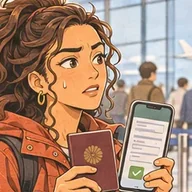

Talking to staff in Japan when the translation app isn't enough
結論
Keep sentences short and polite, show text rather than speaking it, and start with 'sumimasen'. Translation apps get literal meaning but miss politeness and context, so a clear written card or a single key word often works better.

「役立つものをすべてまとめました。誰がお金を払っているかも書いてあります。」
解決する方法
- Kuroko自身のガイド購入する
Eat Anywhere in Japan — 20 show-the-staff cards
20 show-the-staff cards for the moments a translation app gets wrong. $12.
Why apps fall short
Translation apps turn your sentence into correct but often blunt or odd Japanese. Long sentences confuse them. Staff may also be shy to speak English, not unwilling to help.
What works better
- Short sentences. One request at a time: "Is there a vegetarian dish?" not a paragraph about your diet.
- Show, don't speak. Type it, then turn the screen around. Written Japanese is easier for staff than app speech in a noisy shop.
- Point at the menu, the item, the map.
- Numbers on your fingers for people, quantities and times.
- Smile and wait. Staff often go to find a colleague who speaks some English.
The five words that do most of the work
- すみません (sumimasen): excuse me, sorry, and "can I get help?"
- これ (kore): this one. Point and say it.
- ください (kudasai): please give me. "Kore kudasai."
- 大丈夫です (daijōbu desu): I'm fine / no thanks.
- ありがとうございます: thank you.
When it really matters
For allergies, medicine, emergencies or bookings, don't rely on live translation. Use a prepared card with the exact words. That's why each Kuroko guide has show-the-staff phrases.
店員に見せる
すみません。
Sumimasen.
Excuse me.
日本語が話せません。
Nihongo ga hanasemasen.
I don't speak Japanese.
書いていただけますか?
Kaite itadakemasu ka?
Please write it down.
ありがとうございます。
Arigatō gozaimasu.
Thank you very much.
多くの旅行者が到着前に用意しているもの
「広告」=広告主がこの枠に料金を払っています。「アフィリエイトリンク」=手数料を受け取る場合があります。どちらもおすすめの内容には影響しません。