
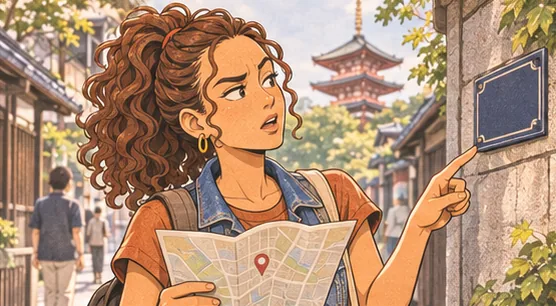
Asal at kalyeKaratula, address at mapa
How Japanese addresses work, and finding your way
Ang maikling sagot
Japanese addresses work by area blocks, not street names: city, district, chōme, block number, then building number. Don't try to navigate by address. Use the building name or phone number in a map app, and follow station exit numbers and neighbourhood maps on the street.
How the address works
A typical address: 東京都新宿区西新宿2丁目8-1
- 東京都 Tokyo (prefecture)
- 新宿区 Shinjuku ward
- 西新宿 Nishi-Shinjuku (district)
- 2丁目 2-chōme (sub-district)
- 8-1: block 8, building 1
Most streets have no names. Blocks are numbered, and building numbers often follow the order buildings were built, not the street.
How to actually find places
- Search by name or phone number in your map app, not the address.
- Station exits: pick the right exit number first. See Huge stations.
- Neighbourhood maps (周辺地図) stand outside stations and at street corners, with "you are here" (現在地) marked in red.
- Address plates on utility poles and buildings show the chōme and block number.
- Kōban (police boxes) give directions. Asking there is completely normal.
Signs
Station and road signs in cities are in Japanese and English, often Chinese and Korean too. In the countryside, English is rarer: keep the destination's name in Japanese characters on your phone to match against signs.
Ipakita ito sa staff
この場所を探しています。
Kono basho o sagashite imasu.
I'm looking for this place.
地図で教えていただけますか?
Chizu de oshiete itadakemasu ka?
Could you show me on the map?
Ang inaayos ng karamihan bago lumapag
- Affiliate linkTingnan ang opsyon
eSIM para sa Japan (Airalo)
May mobile data ka paglapag pa lang.
- Affiliate linkTingnan ang opsyon
Tiket ng tren sa Japan (Klook)
Mga tren sa airport at shinkansen, naka-book sa English.
“Ad” = nagbayad ang isang advertiser para sa puwestong ito. “Affiliate link” = maaari kaming kumita ng komisyon. Walang binabago ang alinman dito sa mga inirerekomenda namin.