Taking photos in Japan: where it's banned and photographing people
Kısa cevap
Look for 撮影禁止 (no photography) signs, which are common in temple halls, museums and some shops. Ask before photographing people, especially maiko and geisha, staff and children. Never use a tripod or block a path in a crowded spot, and never take hidden photos of anyone.
No-photo signs
- 撮影禁止 (satsuei kinshi): no photography.
- フラッシュ禁止: no flash.
- 動画撮影禁止: no video.
Common in temple halls (especially of the main image), museums and galleries, some shops and restaurants, and backstage at events.
Photographing people
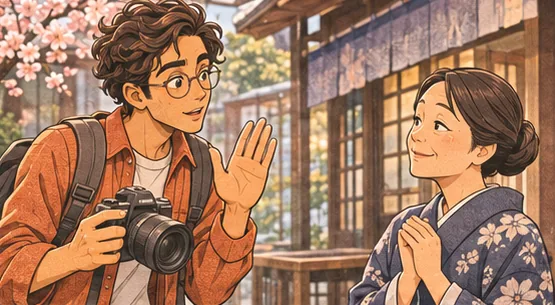
- Ask first (second phrase), especially for close-ups, staff, and children.
- Maiko and geisha in Kyoto are working, often on their way to appointments. Don't chase, block or touch them. Some lanes in Gion ban photography on private property.
- Many people are uncomfortable appearing in strangers' social media. Blur faces if you post.
Crowds and private property
- Tripods and selfie sticks are banned at many sights and on crowded streets.
- Don't block paths, train doors or platforms for a shot.
- Respect "private property" (私有地) signs: some photogenic streets and houses are homes.
What's illegal
- Hidden or intrusive photos of people, especially upskirt photos, are crimes.
- Drones need permission in cities, near airports, at many tourist sites and over crowds. See Laws that differ from home.
Bunu personele gösterin
写真を撮ってもいいですか?
Shashin o totte mo ii desu ka?
May I take a photo?
写真を撮らせていただけますか?
Shashin o torasete itadakemasu ka?
May I take a photo of you?
Çoğu gezginin inmeden önce hallettiği şeyler
- Satış ortaklığı bağlantısıSeçenekleri gör
Japonya eSIM (Airalo)
İndiğiniz andan itibaren mobil veri.
- Satış ortaklığı bağlantısıSeçenekleri gör
Japonya tren biletleri (Klook)
Havalimanı trenleri ve şinkansen, İngilizce rezervasyon.
“Reklam” = bir reklamveren bu alan için ödeme yaptı. “Satış ortaklığı bağlantısı” = komisyon kazanabiliriz. İkisi de önerilerimizi değiştirmez.