Hjálp á ferðalagi um Japan, skrifuð af innfæddum Japana.

Kuroko's Japan
Kuroko's JapanLausnir á 100 ferðavandamálum

Á ferð sem

Hjólastólanotendur

Hjólastólanotendur: það sem gott er að vita í Japan, frá því áður en þú flýgur og þar til eitthvað fer úrskeiðis.

Öll vandamál
  • Aðgengi fyrir hjólastólaFyrir brottförÁríðandi
    Fyrir brottförÁríðandi

    Wheelchair travel in Japan: trains, ramps and calling ahead

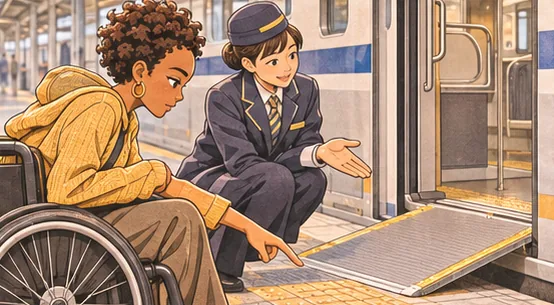
    Tell station staff at the gate where you're going. They'll put down a ramp, call your destination station, and staff there will meet you at the train door. Most big stations have lifts, but older stations, temples and small restaurants often don't, so check ahead.
    Aðgengi fyrir hjólastóla

    Hjólastólanotendur: Allow 10 to 15 extra minutes at each station so staff can arrange the ramp and call ahead.

  • Fellibyljir, úrhelli og snjórÁ ferðalaginuÁríðandi
    Á ferðalaginuÁríðandi

    A typhoon is coming during your trip: what to do

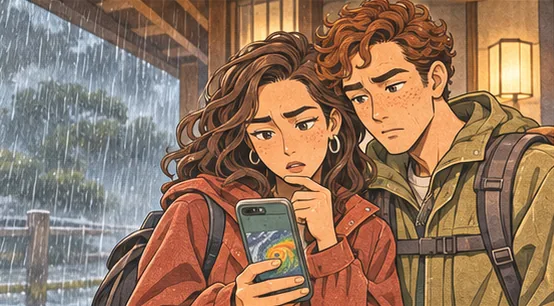
    When railways announce 計画運休 (planned suspension), move your travel to the day before, or stay put until the day after. On the day itself, stay indoors with food and water, keep your phone charged, and follow official warnings, not social media.

    Fellibyljir, úrhelli og snjór

    Hjólastólanotendur: Lifts and step-free routes can close when stations shut. Move travel a day early rather than late, and tell your hotel you may need help.

  • SalerniÁ ferðalaginu
    Á ferðalaginu

    Japanese toilets: the buttons, squat toilets and finding one

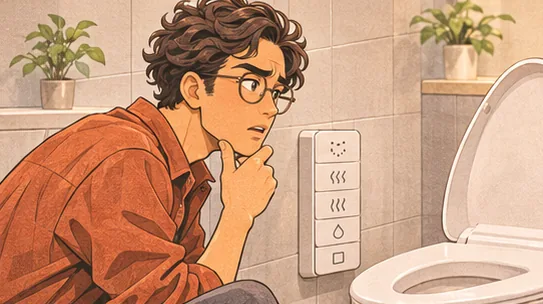
    The main buttons are 止 (stop, usually orange or red), おしり (bidet spray), ビデ (front spray) and 流す or 大/小 (flush, big/small). If you can't find the flush, look for a button or sensor on the wall, not the toilet. Free, clean toilets are in every station, convenience store and department store.

    Salerni

    Hjólastólanotendur: Look for 多目的トイレ or 誰でもトイレ: larger accessible toilets in stations, department stores and big shops.

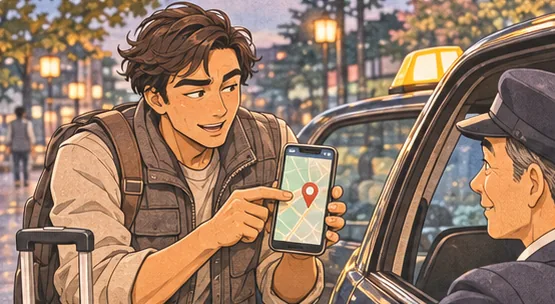
  • Hjólastólanotendur: Many newer taxis (the tall, dark-blue type in Tokyo) have a ramp. Book through an app or ask your hotel to request one.

  • Lestir, neðanjarðarlestir og skiptiÁ ferðalaginuÁríðandi
    Á ferðalaginuÁríðandi

    Lost in a huge Japanese station: transfers and exits

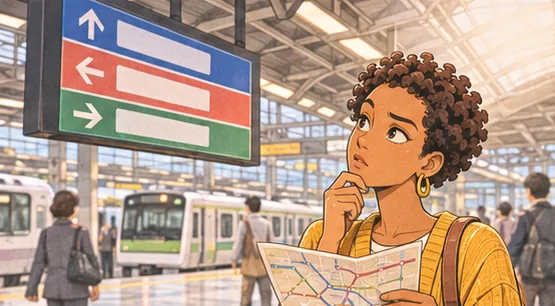
    Follow the line colour and line letter, not the station name: in big stations each railway company has its own gates. Before you leave the platform, decide which exit you need, because the wrong exit can put you a ten-minute walk away.

    Lestir, neðanjarðarlestir og skipti

    Hjólastólanotendur: Look for the green lift signs on the platform. Station staff can also call ahead to your destination station to have a ramp ready.

  • Jarðskjálftar og flóðbylgjurÞegar eitthvað fer úrskeiðisÁríðandi
    Þegar eitthvað fer úrskeiðisÁríðandi

    Earthquakes and tsunami in Japan: what the alerts mean

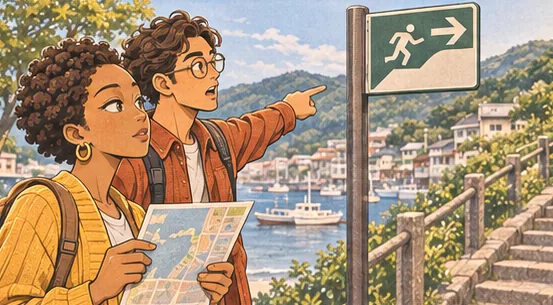
    When your phone screams an earthquake early warning, protect your head and get under a table, away from windows, until the shaking stops. If you're on the coast and a tsunami warning is issued, go to high ground or the upper floors of a tall concrete building immediately. Install the Safety tips app before you travel.

    Jarðskjálftar og flóðbylgjur

    Hjólastólanotendur: Ask your hotel on arrival how they evacuate guests who can't use stairs, and where the nearest evacuation lift or refuge area is.

Fylgdu Kuroko og lærðu óskrifuðu reglurnar í Japan

Stutt myndbönd og fljótleg ráð. Eitt vandamál, ein lausn, alltaf.

Veldu tungumál