Saúde e segurançaEmergências e pedir ajuda
Emergency numbers in Japan and what to say
A resposta curta
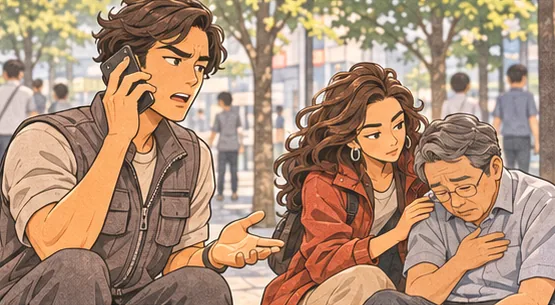
Call 119 for an ambulance or fire and 110 for police. Both are free from any phone and work 24 hours. Start with the one word that matters: 救急です (kyūkyū desu, medical emergency), 火事です (kaji desu, fire) or 事件です (jiken desu, crime). For help in English that isn't an emergency, call the Japan Visitor Hotline: 050-3816-2787.
The numbers
- 119: ambulance (救急車, kyūkyūsha) and fire. Free, 24 hours.
- 110: police. Free, 24 hours.
- 118: coast guard, for emergencies at sea.
- 050-3816-2787: Japan Visitor Hotline, 24 hours, English, Chinese and Korean, for illness, accidents and disasters that aren't life-threatening.
How the call goes
- The operator asks 火事ですか、救急ですか? (fire or ambulance?). Answer with one word: 救急です or 火事です.
- Then where you are. This is the hard part. Give the name of the building, hotel, shop or station, or a sign you can see. Show a nearby Japanese person your phone and ask them to speak.
- What happened, and how many people.
Many emergency call centres can connect an interpreter. Say the fourth phrase.
Where am I?
- Utility poles and some buildings show the address (番地) on small plates.
- Hotel key cards and receipts carry the address.
- Your phone's map can share the exact location: read out the nearest landmark.
Ambulances
Ambulances are free in most of Japan. A few areas now charge for clearly non-urgent use. In a real emergency, never hesitate to call.
Mostre isto à equipe
救急です。
Kyūkyū desu.
It's a medical emergency.
火事です。
Kaji desu.
There's a fire.
事件です。
Jiken desu.
I need the police.
日本語が話せません。英語でお願いします。
Nihongo ga hanasemasen. Eigo de onegai shimasu.
I don't speak Japanese. English, please.
住所は_です。
Jūsho wa __ desu.
The address is __.