Eten & drinkenVoedselallergieën
Eating out in Japan with a food allergy: what actually works
Het korte antwoord
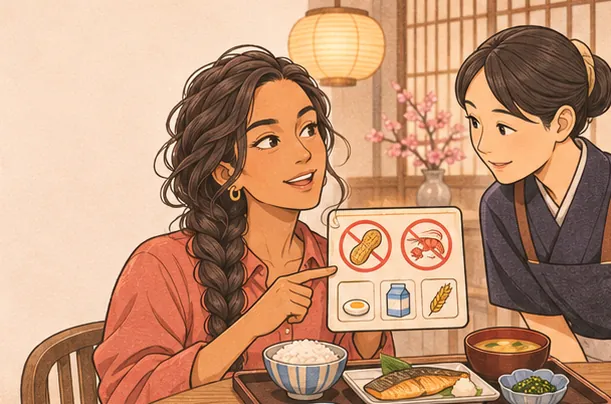
Show a Japanese allergy card at the door before you sit down, ask about soy sauce and dashi stock, and leave politely if staff can't confirm. Packaged food is safer than restaurant food because its allergens must be labelled.

“Hier is alles wat helpt. Ik heb aangegeven wie waarvoor betaalt.”
Zo los je dit op
- Kuroko’s eigen gidsKopen
Eat Anywhere in Japan — 20 show-the-staff cards
Cards written for exactly these four steps, including one for shared frying oil. $12.
Most restaurant staff in Japan want to help. The problem is that "allergy" said in English rarely reaches the kitchen, and allergens in Japanese food hide in the base of the dish, not on top of it.
Where allergens hide
- Soy sauce (醤油, shōyu) is usually brewed with wheat. It is in marinades, dressings and most sauces.
- Dashi stock (出汁) is often made from bonito fish. It is in miso soup, noodle broth and simmered dishes.
- Soba (そば) is buckwheat. Soba shops often boil other noodles in the same water.
- Frying oil is often shared between tempura, fried chicken and fried shrimp.
At the restaurant: 4 steps
- Show your card at the door, before you sit down. If staff shake their head, thank them and leave. That answer protects you.
- Point to the hidden ingredients: soy sauce, dashi, shared frying oil. Use the phrases below.
- Prefer bigger chains when you are unsure. Many large chains publish allergen charts, and staff are trained to look things up. Small family-run places often cannot check every ingredient.
- Carry a backup meal from a convenience store, so a "no" never leaves you hungry.
Packaged food is the safer option
Packaged food sold in Japan must list nine allergens on the label: shrimp, cashew nut, crab, walnut, wheat, buckwheat, egg, milk and peanut. Cashew nut was added in April 2026, and makers have until March 2028 to update their labels, so an older pack may not mention it yet. Twenty more allergens, including sesame, soy and fish, are only recommended, so their absence from a label proves nothing.
Restaurant menus do not have to show allergens at all. That is why the card matters more at a restaurant than at a shop.
If something goes wrong
If you start to react, stop eating and see Having an allergic reaction in Japan.
Laat dit aan het personeel zien
この料理に卵は入っていますか?
Kono ryōri ni tamago wa haitte imasu ka?
Does this dish contain egg?
だしや醤油にも入っていないか確認してください。
Dashi ya shōyu ni mo haitte inai ka kakunin shite kudasai.
Please also check the stock and the soy sauce.
揚げ油は他の料理と同じですか?
Ageabura wa hoka no ryōri to onaji desu ka?
Is the same oil used for frying?
難しければ大丈夫です。ありがとうございます。
Muzukashikereba daijōbu desu. Arigatō gozaimasu.
It's okay if you can't. Thank you.
Als je…
- Voedselallergieën
- If staff hesitate or say 分かりません (wakarimasen, "we don't know"), treat it as a no. A clear no at the door protects you.
- Glutenvrij
- Regular soy sauce is brewed with wheat. Ask for 小麦不使用 (komugi fushiyō, "no wheat") soy sauce, or bring your own wheat-free soy sauce and check the label.
- Vegetarisch & veganistisch
- Dashi stock is usually made from dried bonito, a fish. A dish that looks plain, such as miso soup, often contains it.