
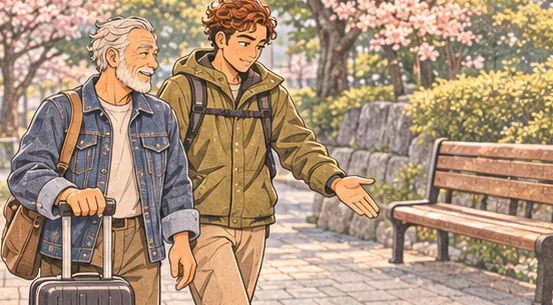
Se déplacerVoyager avec des parents âgés
Travelling in Japan with older parents: stairs and long walks
La réponse courte
Japanese cities involve far more walking and stairs than most visitors expect: 15,000 steps a day is normal. Send luggage ahead, choose hotels next to stations, use taxis for the last stretch, and build rest into every day.

« Voici tout ce qui peut aider. J’ai indiqué qui paie quoi. »
Comment s’en sortir
- Lien affiliéVoir les options
Welcome Pickups: a private driver from the airport
A driver meets you at arrivals. Easiest with kids, older travellers or lots of bags.
- Lien affiliéVoir les options
Luggage delivery in Tokyo (Klook)
Hotel to airport or hotel to hotel, so you travel without your suitcase.
« Publicité » = un annonceur a payé pour cet emplacement. « Lien affilié » = nous pouvons toucher une commission. Ni l’un ni l’autre ne change nos recommandations.
Why it's tiring
Changing trains in a big station can mean 10 minutes of walking and several staircases. Temples and shrines have long gravel paths and steps. Many visitors walk 15,000 to 20,000 steps a day without noticing.
Plan around it
- Hotel next to a station on the line you'll use most. Saving 10 minutes each way, twice a day, adds up.
- Send big luggage ahead between hotels. See Sending your luggage ahead.
- Taxi for the last stretch. Take the train most of the way, then a short taxi ride to the temple gate or restaurant.
- One big thing per day, with a rest after lunch.
- Avoid rush hour on trains.
Seats and lifts
- Every train has priority seats (優先席).
- Station lifts are marked with green or blue signs. Search the station map for エレベーター before you arrive.
- Department stores and cafés are good rest stops. Many have benches on every floor.
Medicines
Bring enough daily medicine for the whole trip in the original packets. See Bringing medicine into Japan.
Montrez ceci au personnel
エレベーターはありますか?
Erebētā wa arimasu ka?
Is there a lift?
座らせていただけますか?
Suwarasete itadakemasu ka?
Could we have a seat, please?
ここからタクシーに乗れますか?
Koko kara takushī ni noremasu ka?
Can we take a taxi from here?
Si vous êtes…
- Voyageurs âgés
- Priority seats (優先席, yūsenseki) are near the doors on every train. People usually give them up when asked politely.