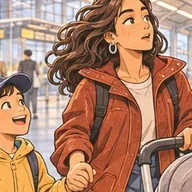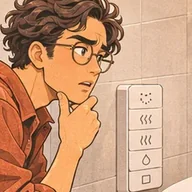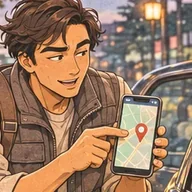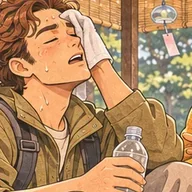
Pomoć za putovanja po Japanu iz pera rođenog Japanca.

Kuroko's Japan
Kuroko's JapanRješenja za 100 putnih problema

Putujete kao

Putovanje s djecom

Što trebate znati u Japanu (Putovanje s djecom), od prije leta do trenutka kad nešto pođe po zlu.

Svi problemi
  • Granična kontrola i carinaPrije polaskaHitno
    Prije polaskaHitno

    Do you need a visa for Japan? Check it in two minutes

    If your passport is from one of Japan's 74 visa-exempt countries and regions, you don't need a visa for tourism: you are given 90 days on arrival (15 days for Thailand and Indonesia, 30 for Brunei and Qatar). Everyone else applies before the trip, online through JAPAN eVISA if you live in an eligible country, otherwise at a Japanese embassy or consulate. Since 1 July 2026 a single-entry visa costs about JPY 15,000 for most nationalities.

    Granična kontrola i carina

    Napomena (Putovanje s djecom): Every child needs their own passport. If your nationality needs a visa, each child needs their own visa too.

  • Napomena (Putovanje s djecom): Strollers don't count as oversized luggage, so you don't need a reservation. If you want the space behind the last row for a folded stroller, reserve that seat.

  • Apartmani i samostalna prijavaPrije polaskaHitno
    Prije polaskaHitno

    Vacation rentals in Japan: getting the key, finding it, and the trash rules

    Read the host's check-in message before you travel: save the exact address, building photos and key box code offline. Japanese law requires hosts to check foreign guests' passports, often by photo upload. Follow the trash sorting and collection-day rules exactly, and keep noise down at night.

    Apartmani i samostalna prijava

    Napomena (Putovanje s djecom): Rentals in residential buildings often have strict quiet hours, usually from about 10 pm. Mention children when booking.

  • Napomena (Putovanje s djecom): Ask for seats in the rear row of a car: there's space behind the seats for a folded stroller.

  • Trešnje u cvatu, jesensko lišće, vatromet i festivaliPrije polaska
    Prije polaska

    Cherry blossoms, autumn leaves, fireworks and festivals: timing and crowds

    Cherry blossoms usually peak from late March in Tokyo and Kyoto to May in Hokkaido, and autumn leaves from late October in the north to early December in the south. Dates shift each year, so follow the official forecasts from about a month before, go early in the morning, and book rooms early.

    Trešnje u cvatu, jesensko lišće, vatromet i festivali

    Napomena (Putovanje s djecom): Fireworks festivals draw huge crowds and long waits for trains afterwards. Leave before the finale, or watch from further away.

  • Najam automobilaPrije polaskaHitno
    Prije polaskaHitno

    Renting a car in Japan: the permit you need and driving on the left

    You need your home licence plus either an International Driving Permit under the 1949 Geneva Convention or, for a few countries, an official Japanese translation of your licence. Without the right document the rental company must refuse you. Japan drives on the left.

    Najam automobila

    Napomena (Putovanje s djecom): Child seats are required by law for children under 6. Book them with the car.

  • Napomena (Putovanje s djecom): Department stores have the best facilities: baby rooms (ベビー休憩室) with changing tables, hot water and nursing rooms.

  • Napomena (Putovanje s djecom): Make one card per child and keep a copy on your phone. Staff at family restaurants are used to allergy questions for children.

  • Od zračne luke do gradaPo dolaskuHitno
    Po dolaskuHitno

    Getting from the airport into the city in Japan

    Pick by your arrival time and your luggage: trains are fastest in the daytime, airport limousine buses drop you near many hotels with your bags, and after the last train, a pre-booked shuttle or taxi is often the only option.

    Od zračne luke do grada

    Napomena (Putovanje s djecom): Airport buses take your suitcases underneath, so the children's hands are free. Often easier than trains with transfers.

  • WC-iTijekom putovanja
    Tijekom putovanja

    Japanese toilets: the buttons, squat toilets and finding one

    The main buttons are 止 (stop, usually orange or red), おしり (bidet spray), ビデ (front spray) and 流す or 大/小 (flush, big/small). If you can't find the flush, look for a button or sensor on the wall, not the toilet. Free, clean toilets are in every station, convenience store and department store.

    WC-i

    Napomena (Putovanje s djecom): Many toilets have a small child seat on the wall of the cubicle, so you can put a toddler down safely.

  • Napomena (Putovanje s djecom): Child seats are not normally fitted in Japanese taxis. Ask for a taxi company that offers them when you book.

  • Bolnice i klinikeTijekom putovanjaHitno
    Tijekom putovanjaHitno

    Seeing a doctor in Japan as a tourist: start with a clinic

    For anything that isn't an emergency, go to a small clinic, not a big hospital: large hospitals add a charge of JPY 7,000 or more if you arrive without a referral. Find an English-speaking clinic through JNTO's medical search or the Japan Visitor Hotline (050-3816-2787), and bring your passport, travel insurance details and a way to pay.

    Bolnice i klinike

    Napomena (Putovanje s djecom): Look for 小児科 (shōnika, paediatrics) on the clinic sign. Bring your child's usual medicines and their weight in kilograms.

  • Ljetna vrućina i toplinski udarTijekom putovanjaHitno
    Tijekom putovanjaHitno

    Japanese summer heat: staying safe from heatstroke

    Japanese summers are hot and very humid, and heatstroke is common in July and August. Watch for the heatstroke alert (熱中症警戒アラート), drink water and electrolytes before you're thirsty, plan outdoor sightseeing for early morning, and go indoors at the first signs of dizziness, cramps or headache.

    Ljetna vrućina i toplinski udar

    Napomena (Putovanje s djecom): Children close to the ground get the heat off the pavement. Strollers trap heat: check them often.

  • Napomena (Putovanje s djecom): Rules are stricter for buyers under 18. A parent should buy the medicine, not the teenager.

  • Napomena (Putovanje s djecom): Ask for children's medicine with 子ども用 (kodomo-yō, "for children") and show the child's age and weight. Many adult boxes say not for use under 15.

  • Vlakovi, podzemna i presjedanjaTijekom putovanjaHitno
    Tijekom putovanjaHitno

    Lost in a huge Japanese station: transfers and exits

    Follow the line colour and line letter, not the station name: in big stations each railway company has its own gates. Before you leave the platform, decide which exit you need, because the wrong exit can put you a ten-minute walk away.

    Vlakovi, podzemna i presjedanja

    Napomena (Putovanje s djecom): Escalators and lifts are often at the ends of platforms. Use the platform maps to find them before the crowd arrives.

  • Izgubljene stvariKad nešto pođe po zluHitno
    Kad nešto pođe po zluHitno

    Left something on a train in Japan: how to get it back

    Go to the station staff or call the railway's lost property line the same day, with the train, time, car number and a precise description. Items are passed to the police after a few days, and the police keep them for three months.

    Izgubljene stvari

    Napomena (Putovanje s djecom): Strollers and toys are among the most common items found. Describe colour and brand: there will be several.

  • Alergije na hranuKad nešto pođe po zluHitno
    Kad nešto pođe po zluHitno

    Having an allergic reaction in Japan: what to do

    Use your adrenaline auto-injector if you have one, call 119 and say "kyūkyū desu" (it's a medical emergency), and show the staff your allergy card so they can tell the paramedics what you ate.

    Alergije na hranu

    Napomena (Putovanje s djecom): If your child is reacting, hand the card to any staff member and say 救急車を呼んでください. You stay with your child.

Pratite Kuroko i upoznajte nepisana pravila Japana

Kratki videi i brzi savjeti. Jedan problem, jedno rješenje, svaki put.

Odaberite jezik